|
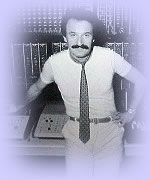
A singer and composer as well as a brilliant producer,
Moroder was born on April 26, 1940 in Ortisei, Italy. He studied art as
a child but on leaving school began playing bass and guitar in touring
groups from 1959 to 1966. In the late Sixties he lived in Berlin, Germany,
working on demos for other artists. Then in 1971 he began experimenting
with computer-based music. His first single was `Looky Looky` in 1969.
He recorded several albums under his own name in the late Sixties and
early Seventies including `Son Of My Father` (1972), which was a big hit.
He formed a production partnership with musician Pete Bellotte and composed
and produced the seventeen-minute epic `Love To Love You Baby` (1975).
Performed by American singer Donna Summer, and released on Casablanca,
it caused a sensation and helped launch the worldwide disco craze. The
record was Top Five in both the UK and US and a hit throughout Europe.
As a result, Donna became known as the `Queen Of Disco`. A vital ingredient
of the heavily copied new sound was a heavy `four on the floor` bass drum
beat. The producers also made clever use of the extra time and space on
12-inch singles, which allowed tunes to be extended for ten or more minutes,
sending dancers into a trance-like state.
Moroder, Bellotte and Donna Summer began releasing albums at the rate
of two a year during their peak period. They also produced the first computerised
disco hit `I Feel Love` (1977) with a pounding, widely copied bass line
and extensive use of synthesizers. As critics have observed, it was Moroder
who `found the soul in machines and turned it loose on the dance floor`.
Giorgio has worked with a dazzling array of artists including The Three
Degrees, Sparks, Blondie, Limahl, Phil Oakey of Human League, Nina Hagen,
Berlin and Janet Jackson. Giorgio`s own vocal style could also be heard
on `From Here To Eternity`, released in September 1977 and later remixed
in 1985.
Moroder has consistently come up with groundbreaking ideas, which have
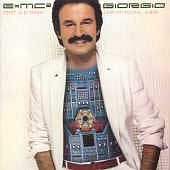
helped change the course of pop music. When his album `E=MC2` was first
released on Casablanca in September 1979, it was hailed as the first disco
digital record and the firs `electronic live to digital` project.
Moroder told Billboard magazine that he had called the album `E=MC"`
because 1979 was designated `The Year Of Albert Einstein`. The digital
project came about by chance when Moroder attended a Los Angeles Hi Fi
show earlier that year. "I saw a digital display from the Soundstream
people. I was attracted and it triggered the impulse to do the project.
It`s going to be the way records are recorded in the future. It`s not
quiet there now, but in a few years digital will be commonplace`.
In making the album, Giorgio made heavy use of computers and electronics,
wedded to the digital process. This involved using 25 computerised synthesizers;
four computerised keyboards, three microcomputers and electronic drums,
percussions and vocals. Explained the producer: "We had 30,000 bits
of information programmed onto computers and we programmed it to play
all the electronic instruments on the album." It took a week just
to set up the process and another five days to get everything synchronised.
The entire project took six weeks,with the recording done at Rusk Sound
in Los Angeles. Additional work was done at Soundstream in Sant Lake City.
The album was co-produced by Giorgio Moroder and Harold faltermeyer (who
wrote the `Axel F` theme from `Beverly Hills Cop`). Faltermeyer programmed
the computer and Soundstream did the digital editing. The writing was
shared between Chriss Bennett, Keith Forsey and Pete Bellotte.
Still regarded as an `amazing` piece of work, even by today`s standards,
Giorgio himself describes it as "Electronic disco with a little pop.
It`s not rock`n `roll".
The music certainly has an infectious, heavy rhythm which permeates such
tracks as `Baby Blue`, `Oh Waht A Night`. `If You Weren`t Afraid`, `I
Wanna Rock You`, `In My Wildest Dreams` and `E=MC2`. The vocals have a
Bee Gees style falsetto, allthough they were electronically processed
to give extra bite.
Reviews for Giorgio`s fouth album for Casablanca were full of praise.
Record World (August 25, 1979) commented: "From the opening measures,
it`s obvious that this is unquestionably Giorgio`s most accessible work.
While refining the technology of music making, he`s somehow assumed a
loose, light hearted playfulness that was never hinted at in his previous
solo work. Giorgio sings here in falsetto, accompanying himself with doo-wop
slanted harmonies, aptly transformed with electronic effects. E=MC2` is
one of the most pleasant surprises we`ve heard this year.`
The extra bonus items on this first official CD version of the album include
`Love`s In You, Love`s In Me` and `Evolution`. The latter is a club classic
from the `Battlestar Galactica` album of 1978. Haunting and mysterious,
the theme lopes along with a throbbing beat for more than fifteen minutes,
utilising both synthesizers and some non-electronic instruments.
`E=MC2` proved a hit around the world and was a Top Ten album in Germany
in October 1979. Giorgio Moroder was voted Top Producer in the US Cashbox
magazine poll and he topped the UK`s Music Week Chart Performance Survey
that same year.
After the release of this album Morode moved onto different projects.
Donna Summer`s `The Wanderer` (1980) was her last with Giorgio, and subsequently
the Moroder/Bellotte/Summer team broke up. The disco era was officially
deemed over. For much of the Eighties Moroder concentrated on writing
film music. It was the futuristic sound of `I Feel Love` that helped introduce
Giorgio to the movies. Director Alan Parker liked the sound of the record
and invited the composer to write music for `Midnight Express` (1978).
It won Giorgio an Oscar for the soundtrack and led him work on many more
soundtracks including `American Gigolo` (1980). He also composed `Take
My Breath Away`, the haunting love theme sung by Berlin in the film `Top
Gun` (1986). This won Moroder his third Academy Award, to add to a trophy
collection, which include more than 100 Gold and Platinum discs.
Giorgio continued producing pop and rock acts, such as Sparks, Japan and
The Three Degrees, co-producing the latter`s hits `My Simple Heart` and
`Jump The Gun`. He also produced `Flaunt It`, the debut album by Sigue
Sigue Sputnik. During the Nineties he became adept at the art of remixing,
working on tracks by The Eurythmics, Heaven 17 and Texas. Over the years
many famous artists have turned to Giorgio Moroder for help and guidance
including Barbra Streissand, Elton John, Cher, Janet Jackson, David Bowie
and the late Freddie Mercury.
With such an astonishing track record behind him, they must have felt
they were in safe hands. In the meantime the digital revolution he pioneered
more than twenty years ago has taken over many aspects of modern living,
from music to movies and from mobile phones to PCs and TVs. Einstein was
right. Energy equals the speed of disco - squared!
CHRIS WELCH, London, England 2001
|