 |
|
| Complete
article on Genre,
august 1999. Don`t miss the Giorgio Moroder interview at the end
of this article! Donna Summer: The Genre Interview by Travis William: From her early years performing in neighborhood churches to vocally simulating orgasm in 17-minute disco remixes, Donna Summer made you want to move. Slammed for allegedly dissing her gay fans in the '80s, she now confronts those rumors head-on. Please retutn to the dance floor - the original queen of disco is back. |
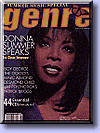
A great cover with a great Donna 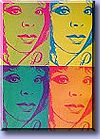
|
|
|
Without Elvis Presley, there would still be rock`n roll. Without Maria Callas, there would still be opera. Without Hank Williams, there would still be country. And ( may god forgive me! ) without Aretha Franklin, there would still be soul. But without Donna Summer, there would be no disco -- that being both her crown and her cross. Coveting her crown were no lesser lights than Barbra Streisand, Tina Turner, Debby Harry, Cher and Diana Ross. Yet Donna Summer remains the undisputed queen of disco, the only superstar of the era. The cross she bears is the demise of disco and the listening public`s reluctance to let her step down off the throne and move on. To most, Donna Summer still means Disco, but she believes she has muchmore to offer. She was born LaDonna Andrea Gaines on New Year`s Eve 1948, one of six children of working-class parents in Boston. music became a force in her life early on as she listened to Nahalia Jackson and began performing in neighborhood churches. In high school, she became the lead singer in a rock band, Crow, playing in local clubs on the weekends and listening to Janis Joplin. Hoping to replace the departing Melba Moore, Donna traveled to New York to audition for the Broadway musical Hair. Instead, she was offered the part in the newly formed European touring company. Accepting the role, she left school and America. Upon completion of the tour, Donna settled in Munich> During that time, she appeared in Showboat, Porgy and Bess, Godspell and The Me Nobody Knows and performed with the Vienna light Opera. she married Austrian peter Sommer, an actor she had come to know through her work. After the birth of her daughter Mimi, Donna effectively retired, fully intending to remain in Germany as a wife and mother. The story might have ended there except she soon became lonely and bored and left home alone every night with an infant while her husband went to work. For someone with the energy Donna possessed, a creative outlet was a necessity. To fill her days and to satisfy her unfulfilled yearning, Donna began working as a backup singer at MusicLand studios. There she met up-and-coming producers Giorgio Moroder and Pete Bellotte. One day, they asked her to help out by making a demo tape. "I was trying to give an idea," she says, "a feeling of the song so the writer could have a sense of it." So for three minutes she moaned and vamped the words love to love you baby. In what might be an object lesson for every artist who sees fit to judge their own work, Donna remembers, "I didn`t think the song was finished." In a music-business version of being discovered sitting at the drugstore counter, Casablanca Records chief Neil Bogart played the unfinished tape at a party and his guests kept requesting it over and over. Bogard contacted Moroder and asked him to create a longer version of the recording. the resulting 16-minute and 50-second song debuted on Casablanca`s Oasis label. Falling from the charts twice, the song finally became a hit in Europe. Then 10 days before her 27th birthday, the song that Donna says... |